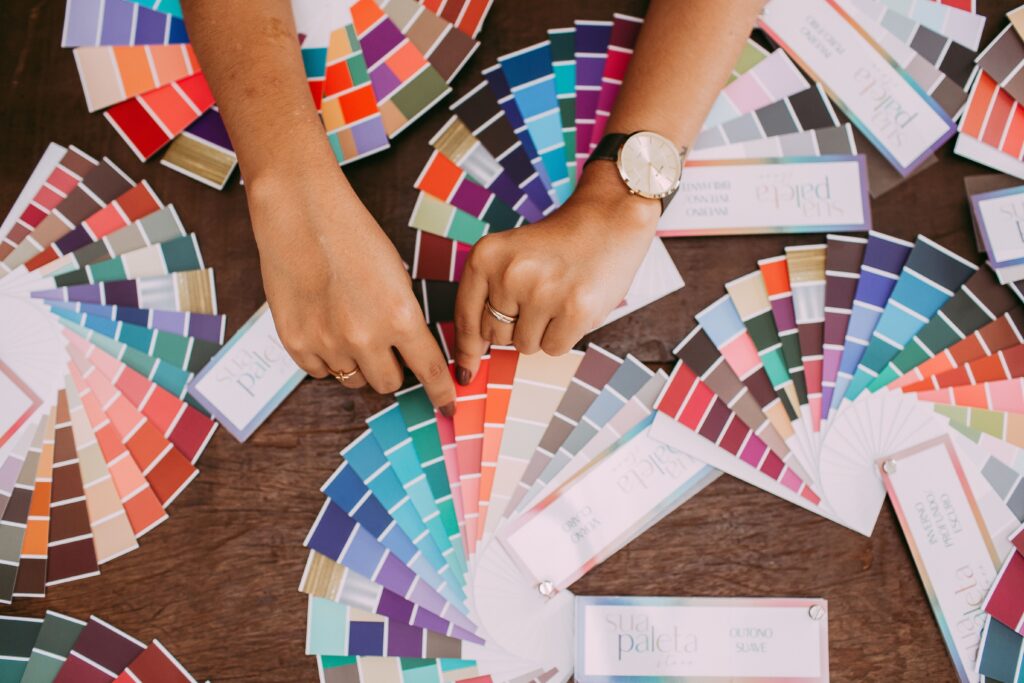
Ask ten women if they know their colour season and most will say no, or will mention a quiz they did once and never used again. Yet colour is the single fastest lever you can pull to look more rested, more polished, and more like yourself, without changing a single thing about your face.
What a colour season actually is
Your colour season describes the palette of shades that genuinely harmonise with your natural colouring: your skin undertone, the depth of your hair, and the clarity of your eyes. Wear colours inside that palette and you look rested and vivid. Wear colours outside it and you can look tired, sallow, or older, even in a beautifully made garment.
The four seasons, briefly
Colour analysis divides palettes into four broad seasons, each with three sub-seasons, giving twelve total palettes. Broadly:
- Spring: warm and clear, suits women who glow in peachy, golden, and bright warm tones.
- Summer: cool and soft, suits women who look best in muted, dusty, cooler shades.
- Autumn: warm and deep, suits women who come alive in rich, earthy, golden tones.
- Winter: cool and clear, suits women who look striking in bold, high-contrast, jewel tones.
Because there are twelve total palettes, your season is genuinely specific to you, not a generic bucket of four colours.
Why this matters more than people think
Colour sits closer to your face than almost anything else you wear. A blouse in the wrong tone can make your skin look uneven or your eyes look tired, while the same blouse in your correct palette can make people comment that you look well, even on a day you slept terribly. It is one of the only style tools that genuinely changes how people perceive your energy and health, not just your outfit.
How to start finding yours
A simple starting point at home: hold a piece of bright white fabric or paper next to your bare face in natural daylight, no makeup. If your skin looks more yellow, golden, or peachy by comparison, you are likely warm. If it looks more pink, rosy, or blue-toned, you are likely cool. This is a rough first signal, not a full diagnosis, since true seasonal analysis also weighs depth and clarity, which is why a proper consultation uses fabric draping under neutral light rather than guesswork.
What changes once you know your season
Clients consistently tell me the same thing after a colour season analysis: shopping becomes faster because half of every rack is immediately ruled out, makeup becomes simpler because foundation and lipstick shades stop fighting their skin, and they start receiving more comments on how well they look, not just how nice the outfit is. It is a small piece of information with an outsized return.
An In Person Colour Analysis brings the whole process to you. We perform your analysis in person, then write a report on your colour season and how to shop by your colours, so instead of a guess you leave with a confirmed, personal palette.